Link: British Library events / Link: The Wire
As part of the British Library’s Out Of This World exhibition, regular Wire contributor Ken Hollings will be performing with the Radio Science Orchestra, on a bill alongside Global Communication (Mark Pritchard and Tom Middleton).
The Radio Science Orchestra is led by writer and producer Bruce Woolley, and deals in bringing vintage electronics together with conventional orchestral instruments. Also on the bill are Global Communication, playing live for the first time in 15 years, recreating their 1994 LP 76:14, plus DJ sets from Jon Hopkins and Rob Da Bank. Attendees are encouraged to dress in "sci-fi glamour", or at the very least, in something silver. London British Library, 17 June, 7:30–11pm, £12.50.

Showing posts with label Music. Show all posts
Showing posts with label Music. Show all posts
14 June 2011
Global Communication & Ken Hollings At The British Library


20 December 2010
John Cage
Cage (and particularly his 4'33") was hugely influential with the theory behind the Sshhh project. In what was a (failed) campaign for an alternative Christmas number one single, it's now at 21 in the Top 40. I hope that a few more people investigate some of the ideas behind the piece rather than just see it as a subversive attempt to topple X Factor.
The remixes, by the way, are entertaining. I particularly like Herve's 'Tidies Up The Studio remix' where the silence is punctuated by the odd bit of background noise.
Available to download here: Cage Against The Machine
The remixes, by the way, are entertaining. I particularly like Herve's 'Tidies Up The Studio remix' where the silence is punctuated by the odd bit of background noise.
Available to download here: Cage Against The Machine
01 September 2010
Various - Fünf
artist: Various
title: Fünf
label: Ostgut Ton, DE. (Distributed by Word & Sound, DE.)
date: 25.10.10
(Available via the following link: Funf
Ostgut Ton releases this unique compilation of music crafted from field recordings made inside the two Berlin clubs Berghain and Panorama Bar. The concept and original recordings were made by the Berlin based producer Emika. Over a period of two months Emika created the recordings in the clubs while they were closed to the public and edited them into a library of sounds. The library was then given to all the Ostgut Ton artists, but also to club associates like DJ Pete aka Substance, Dinky, Cassy, Margaret Dygas, Ryan Elliott and Scuba using his SCB alias, to make music with. This release marks the celebration of the label's five year anniversary.
Emika's idea started from feeling the whole building resonating from the music being played, which lead to the question: which sounds exist here when there is no party? Intrigued by stories of how the club spaces and sound systems influence the resident DJ sets and productions, Emika was curious to explore what music could be made from the building itself. Berghain’s sound technicians Krischan Makswitat and Silvio König, helped to record the entire light rig including the strobe lights, which in itself sounds techno. Other interesting sources to record were the large cooling rooms used for storing thousands of drinks in bottles. The ventilation systems in these rooms make incredible sub frequencies mixed with the sound of the bottles vibrating against each other. The club also contains large swings made from metal which creak and moan at the slightest of movements.
In total the library comprised over four gigabytes of sounds, and the artists were not given restrictions on how to make music from the library. The tracks on this compilation consist of each artists signature production aesthetics and feature debut solo productions by our residents Fiedel (one half of seminal Berlin based outfit MMM), Boris and Prosumer’s long term production partner Tama Sumo. All together this release highlights the special and inseparable relationships between the label, club space, and collective of artists.
16 May 2010


17 April 2010
Grafik issue 185


The latest issue of Grafik is out and its devoted to the subject of music. There's a good feature on Manchester design agency Music, but the rest is mainly concerned with the importance of sound to visually literate creatives (i.e. not just designers).
I particularly like the 'Dataphonics' by Ryoji Ikeda (picture 4). There is also a really nice feature on Hyphen books. Anyway, I reckon that there's enough content relevant to my work to warrant the £9 price tag.
[By the way, Kick-Ass is great.]
13 April 2010
Mike Cina for Ghostly International

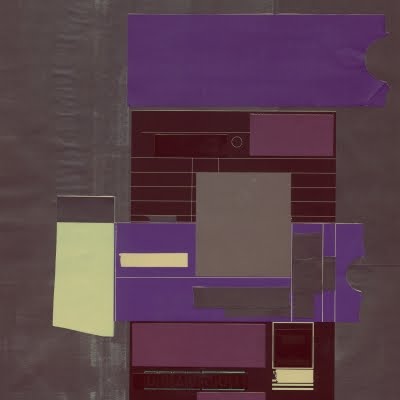

I mentioned Ghostly International in a previous post when noting the US label's issuing of the Terry Riley composition. The latest artwork was the work of Mike Cina who, alongside Will Calcutt, has been responsible for most of the sleeves in 2010. What he's produced this year is really inspiring. I mean, the label itself doesn't have a generic sound and each of these disparate recordings have been given an equally individual identity. But it's the approach to visualizing sound in a way that conveys a sensation that really works for me. The abstraction involved is a perfect way of creating a referent for this completely different art form: one that hints at the texture, timbre, pitch and tone of what the contents of each package might contain.
Creative Director Cina also has his own company with its portfolio at http://cargocollective.com/michaelcina. His clients have included Coke, Apple, Diesel, Hitachi, Pringles and more. He also founded http://www.youworkforthem.com/ - an excellent design resource.
06 April 2010
Library rhythm
Hardly likely to be crashing into the Top 40 anytime soon, the above was a test to see how the noise from the British Library could be arranged. All the audio is sourced from those London recordings with snippets organised to create a rhythm. I've also cobbled together a quick and very rough visualization video using imagery generated by the audio itself - seeing as it was getting uploaded to Youtube.
Terry Riley - In C


A great modern U.S. label, Ghostly is releasing The Grand Valley State New Music Ensemble's version of In C which was composed by the influential Terry Riley. You can download an excerpt of it here.
The original is a landmark piece of minimal music comprising of 53 music "cells" that last between half a beat and 32 beats. It was written to be played by any number of musicians using any instruments. This latest version - performed by its 16-strong ensemble - comes with some beautiful artwork [pictured above, first image] that I think elegantly reflects the record's fusion of classical and contemporary. However two earlier recordings also tried to distil its parts into a visual form. Those are also pictured to note the different ways that the same experimental audio has been interpreted visually.
Some of the versions are available to purchase via the following links:
Riley, T - In C

Terry Riley in C

05 April 2010
Obsolete technology: noise as music
Big Ideas (don't get any) from James Houston on Vimeo.
Two closely related projects above. The first being Queen's 'Bohemian Rhapsody' assembled from dot matrix printers and other electronic crap from yesteryear. For me, it's incredibly melancholic. As are Radiohead, of course, who have been processed in much the same way for the second project.
I'm referencing these for a couple of reasons. The first is that it relates to an earlier suggestion that the library noise could be reconfigured into a less haphazard form. It could become rhythmic and arranged (if not quite music). But the aesthetics of the projects are also interesting to me. I've spoken with Dave in the past about obsolete technology as we both felt that the history of hardware hasn't been documented properly due to the haste to constantly upgrade. Okay, people might snigger or indulge in some retro fetishism for an old Atari or Sinclair, but then there has been a mountain of other electronic machinery integral to a lot of industries that - despite probably having the combined memory of one current mobile phone - actually tells us a lot about how things used to be produced. And maybe by acknowledging that development we would be less inclined to take for granted the ease of current digital production.
31 March 2010
Sonic Warfare: Sound, Affect, and the Ecology of Fear by Steve Goodman
 Yesterday I saw Dr. Michael Goddard - one of the organisers of the Bigger Than Words, Wider Than Pictures conference. We actually met to discuss the PhD proposal I'm putting together with his help but we also chatted briefly about the upcoming event. There's some great stuff planned. We touched on my contribution and Michael suggested that I might be interested in reading a recent book by Steve Goodman titled Sonic Warfare: Sound, Affect, and the Ecology of Fear.
So I Googled it when I got home and realised that Steve Goodman is the same Steve Goodman that I actually know through his work with the Hyperdub label. There he's more noticeable as Kode 9 and, as label boss, is responsible for releasing groundbreaking music by the likes of Burial, Zomby, Flying Lotus, Martyn, Samiyam, Joker and more. In fact I interviewed him back in 2008 for something else.
What I didn't realise then is that the guy who has also pushed innovative electronic sounds via fanzines and club nights also has a very impressive academic career. With a PhD in philosophy he has apparently studied rave culture, cybernetics and postmodernism and now this book journeys through “philosophy, science, fiction, aesthetics, and popular culture, as he maps a (dis)continuum of vibrational force, encompassing police and military research into acoustic means of crowd control, the corporate deployment of sonic branding, and the intense sonic encounters of sound art and music culture”. A read then perhaps as heavy as one of his DJ sets.
Anyway, I've now got it on order from Amazon.
Available via the following link: Sonic Warfare: Sound, Affect, and the Ecology of Fear (Technologies of Lived Abstraction Series)

Upcoming projects from Matthew Herbert

While engaging with this project's recordings, it was impossible not to recount the work of 'found sound' artists. Musicians like Matmos and Matthew Herbert, for example, have been sampling everyday noises for years before constructing them into intricate, if sometimes wonky, compositions. Today I received notification of three new projects by the latter which are all due for release this year.
Herbert's first - titled One One - is a solo album which is something of a departure after a series of collaborative works. It also includes his singing. The second will be One Club: a long-player assembled from sounds recorded in a German nighclub. The last - and perhaps most controversial - is One Pig.
The process for the final offering has been documented at http://thisisapig.blogspot.com/ and, yes, it involves the noises made by a pig. However Herbert intended to use the sounds of the pig's slaughter in the piece but had difficulties finding an abattoir and attending vet willing to allow the recording of this act.
Last month PETA condemned the project as "cruelty as entertainment" which prompted Herbert to argue that he had merely intended to record the pig throughout its entire life cycle. And the pig at the centre of the controversy was born on a farm that raises its animals for consumption. Herbert pointed out that he hadn't interfered in any way with these events but also made a case for the right to draw attention to just how meat is produced.
Subsequently this (currently unfinished) work has possibly become less about "entertainment" and more about challenging ideas: notions not only about how we feed ourselves (plus the hypocritical squeemishness we develop when faced with the truth about what ends up in our supermarkets), but also the role of art in providing information that might otherwise be hidden from the public.
Which is even more interesting when you consider that Herbert [who isn't a vegetarian; I'm not either] insists that he started this project with no agenda. Especially given that the issues surrounding the work have additionally inspired a campaign for clarity regarding the methods involved in food manufacture (http://www.seeyourfood.org/).


25 March 2010
Pappeltalks
PAPPELTALKS from vizage on Vimeo.
One of the good things about this Masters is having a group of creative people undertaking the same course of study that spot things that you might otherwise miss. As with the last post, Amy found the above.
Last week Kai also brought in Johnny Trunk's book on 'Library Music' which has some inspirational examples of vintage graphic design.
21 March 2010
Basic Sound Effector from Adam Brandon
Basic Sound Effector from Adam Brandon on Vimeo.
The software used to create this was something called Cinema 4D.
20 March 2010
Cardboard Record Sleeve Doubles as Record Player

From gizmodo.com:
This is pure genius: Audio engineering company GGRP Sound sent a 45rpm record in a corrugated cardboard sleeve that doubles as a record player. You can put it together one single step.

11 March 2010
Chris Cunningham
I'm currently working on something else where I may get to interview director Chris Cunningham. Who is one of my idols and a truly modern visionary. Ahead of that, I'm revisiting the Directors Label DVD that collected together some of his work back in 2003 and its booklet contains some words from him about trying to provide visuals for music.
On his video debut making Autechre's 'Second Bad Vilbel':
While Cunningham sees this project as something of a failure, it was the first in a series of works that married sound and vision - albeit while developing a relationship that is uniquely Chris Cunningham. How some of these ideas were triggered by a particular record is really interesting [in the case of Aphex Twin's 'Windowlicker', as one example, he felt that the track itself verged on the pornographic while he also wanted to create something that subverted the imagery that we are used to seeing in rap videos].
Anyway, this presents a good enough reason to embed some of his work here for future reference. The last, his own 'Rubber Johnny' film project, is a pretty disturbing masterpiece.
Autechre - 'Second Bad Vilbel'
Bjork - 'All is Full of Love'
Aphex Twin - 'Windowlicker'
Aphex Twin - 'Come To Daddy'
Portishead - 'Only You'
The Horrors - 'Sheena is a Parasite'
Chris Cunningham - 'Rubber Johnny' [music by Aphex Twin]
By the way, this isn't the first time I've posted something Aphex Twin-related. Previously I added his spectrogram. Interestingly, he also claims to suffer from synaesthesia which is very much related to the report part of this study.
On his video debut making Autechre's 'Second Bad Vilbel':
"...I was obsessed with the idea of making things move in time with music. I was trying to build this chunk of non-specific industrial machinery that would come apart in time to the music. So I built this model in my back garden and got all these pieces of machinery and stuff and ended up filming them. Then I tried to make a video out of the footage. I remember the band being really disappointed and me realising that the bottom line is... how do you turn a visually abstract idea into a piece of film. Even now I think that most of the stuff that I think up whilst listening to music is impossible to achieve..."
While Cunningham sees this project as something of a failure, it was the first in a series of works that married sound and vision - albeit while developing a relationship that is uniquely Chris Cunningham. How some of these ideas were triggered by a particular record is really interesting [in the case of Aphex Twin's 'Windowlicker', as one example, he felt that the track itself verged on the pornographic while he also wanted to create something that subverted the imagery that we are used to seeing in rap videos].
Anyway, this presents a good enough reason to embed some of his work here for future reference. The last, his own 'Rubber Johnny' film project, is a pretty disturbing masterpiece.
Autechre - 'Second Bad Vilbel'
Bjork - 'All is Full of Love'
Aphex Twin - 'Windowlicker'
Aphex Twin - 'Come To Daddy'
Portishead - 'Only You'
The Horrors - 'Sheena is a Parasite'
Chris Cunningham - 'Rubber Johnny' [music by Aphex Twin]
By the way, this isn't the first time I've posted something Aphex Twin-related. Previously I added his spectrogram. Interestingly, he also claims to suffer from synaesthesia which is very much related to the report part of this study.
10 March 2010
Noisia - 'Machine Gun' video
Holland's Noisia - an act known for their ability to shift from drum & bass to electro - have employed Henk Loorbach to provide a video for the grinding title track from their new 'Machine Gun EP'. The band state that it's “an abstract story of mankind and its self-destructiveness, loosely based on the tale of Frankenstein’s monster”.
It possibly has very little to do with my current project although I do like the use of the collaged footage within the video. [Even though it gets a bit gory towards the end.] Anyway, just as a general influence, I thought that it was worth documenting.
Meantime, I also booked my ticket to go to London to carry out my British Library work.
08 March 2010
Tenori-On
tenori-on from M I C H E L on Vimeo.
The last video reminded me to post something on the Tenori-On. Probably most visible via Little Boots' performances, this sequencer is an instrument that also provides a visualization of the music as it plays. I've seen it used a few times (including as part of Little Boots' stage show) and it's hypnotic.
Clavilux 2000: Generative Music Visualization Composition
Clavilux 2000 - Interactive instrument for generative music visualization from Jonas Heuer on Vimeo.
Another link that I need to thank Amy for finding:
Clavilux 2000 [jonasheuer.de] is a subtle music visualization installation that represents the playing of sounds by way of a simultaneous animation that can be interpreted.For every note played on the keyboard, a stripe appears of which the dimensions, position and color correspond to the way the particular key was stroke. The length and vertical position of stripe is mapped unto the velocity, while the stripe's width reflects the length of each note. By mapping the color wheel on the circle of 5ths, the colors give the viewer (and listener) an impression of the harmonic relations. Notes belonging to one specific tonality correspond to colors from one specific area of the color wheel. Therefore each key has its own color scheme and "wrong" notes stand out in contrasting colors. The more different tonalities a music piece has, the more colorful the resulting visualization will be.
As all the stripes do not disappear, the resulting representation is able to convey insights about the composition as well as the specific performance: Which notes were played the most? Which were the loudest notes? Which range of the keys was played mostly? How harmonically constant was the music?
23 February 2010
Studio Tonne
 Some more remarkable, recommended work [with the tip coming from Tash] is that of Studio Tonne. Loads of great stuff on their web that touches on the relationship between sound and vision: from music packaging to interactive audio projects (or, as they prefer "sound toys").
Website here: http://www.studiotonne.com/
22 February 2010
Bicycle Built for Two Thousand by Aaron Koblin and Daniel Massey

Bicycle Built for Two Thousand from Aaron on Vimeo.
The excellent link above came courtesy of Amy [cheers!] with the original project documented here: http://www.bicyclebuiltfortwothousand.com
Subscribe to:
Posts (Atom)

