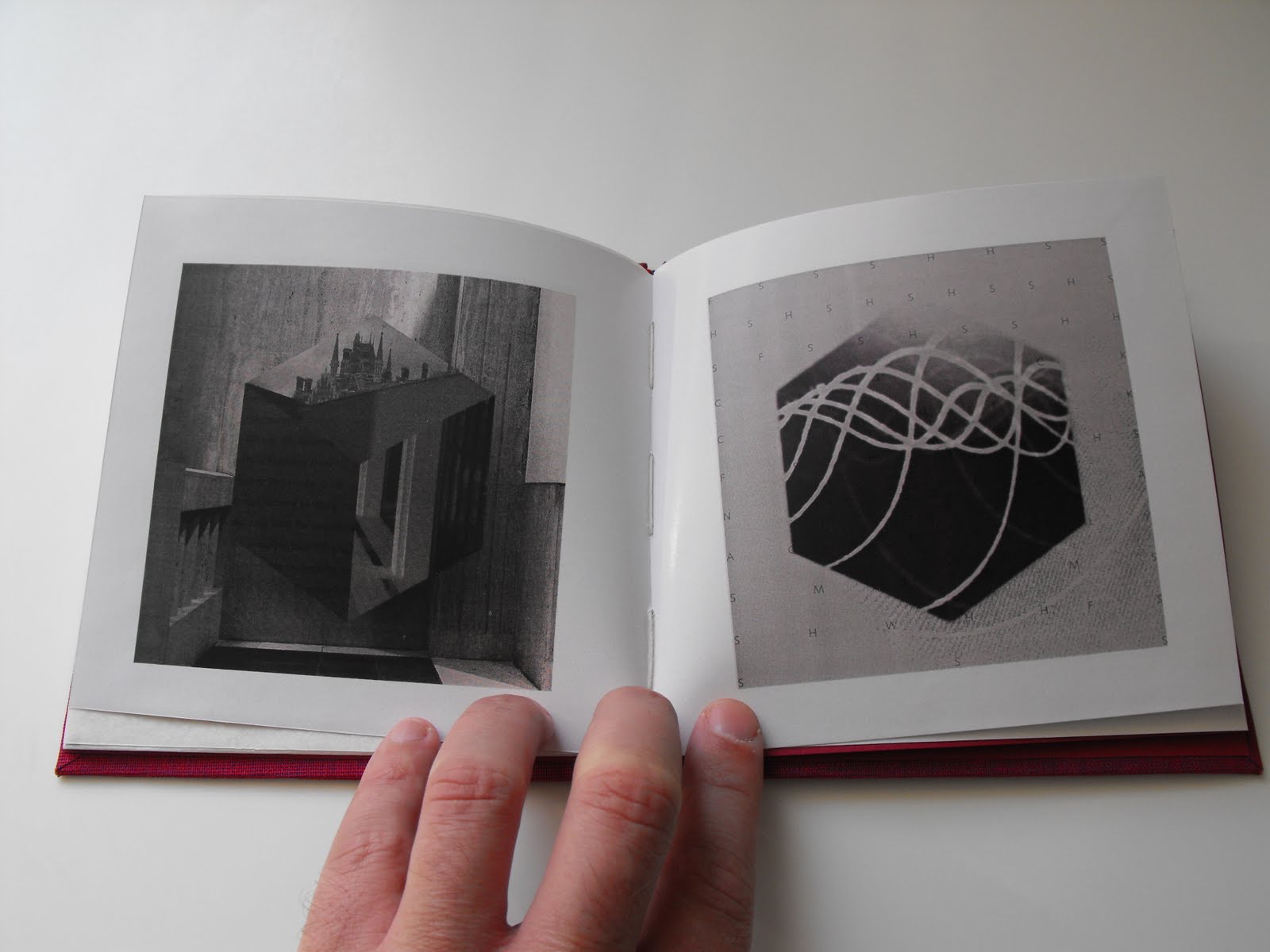
Edited by Drs Michael Goddard, Paul Hegarty and Benjamin Halligan is this groundbreaking collection that studies noise not merely as a sonic phenomenon but as an essential component of all communication and information systems. It's due for publication through Continuum next year and includes a chapter that I contributed based on my MA project. Despite what it says below, the title of the chapter has actually been changed to the simpler, perhaps more intriguing "Sshhh".
Description
Noise permeates our highly mediated and globalised cultures. Noise as art, music, cultural or digital practice is a way of intervening so that it can be harnessed for an aesthetic expression not caught within mainstream styles or distribution.
This wide-ranging book examines the concept and practices of noise, treating noise not merely as a sonic phenomenon but as an essential component of all communication and information systems. The book opens with ideas of what noise is, and then works through ideas of how noise works in contemporary media, to conclude by showing potentials within noise for a continuing cultural renovation through experimentation. Considered in this way, noise is seen as an essential yet excluded element of contemporary culture that demands a rigorous engagement. Reverberations brings together a range of perspectives, case studies, critiques and suggestions as to how noise can mobilize thought and cultural activity through a heightening of critical creativity.Written by a strong, international line-up of scholars and artists, Reverberations looks to energize this field of study and initiate debates for years to come.
Table of Contents
The Philosophy of Noise
1. Paul Hegarty, ‘A Chronic Condition: Noise and Time’ 2. Scott Wilson, ‘Amusia, Noise and the Drive’ 3. Andrew McGettigan, ‘Noise, Affect and Experience’ 4. Cecile Malaspina, ‘Simondon, Complexity and Organised Noise’
Media Ecologies of Noise
5. Dean Lockwood, ‘Mongrel Vibrations: H. P. Lovecraft’s Weird Ecology of Noise’ 6. Khadijah White, ‘Considering Sound: Language, Meaning and the Construction of Noise’ 7. José Castanheira, ‘The Matter of Numbers: Sound and the Experience of Noise in Analog and Digital Models’ 8. Rosa Menkman, ‘From Artefact to Filter, or how Noise Artefacts have become Commodities’
Audiovisual Noise Aesthetics
9. Laura Wilson, ‘Physical Spectatorship: Noise and Rape in Irreversible’ 10. Robert Walker, ‘Cinematic Tinnitus’ 11. Benjamin Halligan, ‘Noise for the Failing Image’ 12. Daniel Cookney, ‘Sshhh: A Visual Exploration of Relative Silence/Noise’ 13. Felicity Colman, ‘Sound manifesto: Lee Renaldo’s Notes for Robert Smithson’ 14. Rob Gawthrop, ‘Thunder and Lightning: Noise and the avant-garde’
Noise Ethics and Politics
15. Mattin, ‘Anti-Self: Noise and the Destruction of Managerial Logic’ 16. Marie Thompson and Clara Latham, ‘Exploitation or Emancipation? The Affect and Ethics of Noise’ 17. Saeed Hydaralli, ‘What is Urban Noise? An Inquiry into its Formal Properties’ 18. Bruce Russell, ‘Exploding the atmosphere: Realising the revolutionary potential of “the last street song” ’
"Reading – for the sake of knowledge or enjoyment, or to explore the world of the human imagination – is one of those experiences that gives you a sense of emotional and spiritual richness quite different from economic or monetary well-being. In this sense, the act of creating a space that surrounds you with books is undoubtedly linked to the creation of a new, enriched sense of public values...
...This library consists of a single quiet and tranquil room that resembles a forest, filled with soft light and a feeling of openness reminiscent of the outdoors. "
Hoon Kim 30 Beautiful Everyday Sounds New York, NY: H. Kim. 2009
Synopsis: This collection of bold, black and white pixelated patterns was created using a system that translates sound into pattern, relying on pitch and volume to determine the size and shape of the pixels. Graphic designer Hoon Kim interprets 30 sounds, ranging from a baby’s sneeze and a ticking alarm clock to the sound of bread being sliced, or of silence.
Category: Book Pages: 64 p. Dimensions (Height x Width x Depth): 20.5 x 20.5 cm. Cover: Paperback Binding: staple bound Process: offset-printed Color: black-and-white
This looks interesting and appears to involve some kind of latex mould. It was on Ffffound.com - albeit a Tumblr addition. Sadly I can't find any further information on the project.
Sound recordings from three glaciers in Iceland, pressed into three records, cast, and frozen with the meltwater from each of these glaciers, and played on three turntables until they completely melt.
The records were played once and now exist as three dvds. The turntables begin playing together, and for the first ten minutes as the needles trace their way around, the sounds from each glacier merge in and out with the sounds the ice itself creates. The needle catches on the last loop, and the records play for nearly two hours, until completely melted.
Ostgut Ton releases this unique compilation of music crafted from field recordings made inside the two Berlin clubs Berghain and Panorama Bar. The concept and original recordings were made by the Berlin based producer Emika. Over a period of two months Emika created the recordings in the clubs while they were closed to the public and edited them into a library of sounds. The library was then given to all the Ostgut Ton artists, but also to club associates like DJ Pete aka Substance, Dinky, Cassy, Margaret Dygas, Ryan Elliott and Scuba using his SCB alias, to make music with. This release marks the celebration of the label's five year anniversary.
Emika's idea started from feeling the whole building resonating from the music being played, which lead to the question: which sounds exist here when there is no party? Intrigued by stories of how the club spaces and sound systems influence the resident DJ sets and productions, Emika was curious to explore what music could be made from the building itself. Berghain’s sound technicians Krischan Makswitat and Silvio König, helped to record the entire light rig including the strobe lights, which in itself sounds techno. Other interesting sources to record were the large cooling rooms used for storing thousands of drinks in bottles. The ventilation systems in these rooms make incredible sub frequencies mixed with the sound of the bottles vibrating against each other. The club also contains large swings made from metal which creak and moan at the slightest of movements.
In total the library comprised over four gigabytes of sounds, and the artists were not given restrictions on how to make music from the library. The tracks on this compilation consist of each artists signature production aesthetics and feature debut solo productions by our residents Fiedel (one half of seminal Berlin based outfit MMM), Boris and Prosumer’s long term production partner Tama Sumo. All together this release highlights the special and inseparable relationships between the label, club space, and collective of artists.
I thought that I was ready to wrap up this project (again). Especially as I'm currently submerging myself in my MA dissertation/final major project. However, I now need to work on a proposal/publication extract for one of the books triggered by the conference. I am daunted by this - as it will be my first attempt at being published academically - but I'll give it a go. I just need to untangle the theory that underpinned my practice so that it might work as a clear and concise chapter within a volume concerned with the politics and perceptions of noise.
I have to include:
A 400 word proposal detailing the issues that the chapter will address and how it will be organised
A few academic references and 5-6 keywords
A 200 word biographical note
In fact, it's not that dissimiliar to what was submitted in answer to the conference's call for submissions although that was actually a very vague outline. It's essential that I now can pick out what is the philosophical stance I've come away with after going through this process. The final chapter will be around 5,000 words but won't need to be submitted until the end of the year.
Additionally, I expressed interest in assisting with any design aspects for the completed books should that be required. I feel that having a hand in the production of the volumes would be a fitting end to this project.
The Noise conference went well last week. I was particularly impressed by the sheer breadth of contributions. I didn't get chance to catch everything I was interested in due to various panels clashing. That said, some amazing and inspiring views on the subject and Dave dropped in for the showing of The Beat Is Law plus I met Cabaret Voltaire's Stephen Mallinder who was a really nice, interesting bloke. Additionally Michael Goddard has said that there is interest from publishers in the papers that will hopefully prompt two books [each looking at different aspects of the phenomena: roughly along the lines of Noise in Music/Noise Musics and the Aesthetics/Philosophy/Politics of Noise].
I forgot to use my camera but Rosa Menkman - whose own work is concerned with glitches in technology - posted some here.
I'm rewriting my Sshhh presentation for Friday's panel. I'm drawing a little from the research I'm doing for my dissertation project with observations on how kids observe silence. That has given me the chance to contrast John Cage's philosophy with that of Dizzee Rascal. I'm also trying not to be too rigid with the layout so that it feels a bit more informal.
It's a bit late for adding inspirational images, but I've just been looking at the artwork that was created for the releases celebrating the 20th anniversary of Warp Records. The above cover from the series particularly captures far more successfully what I was trying to achieve when I created the image found on this link. It's that ominous, awkward quality that I think makes it a perfect metaphor for the existence of sound within an environment.
Anyway, while this is being added after completing the negototiated project, it's worth noting as my dissertation will be investigating design for music.
A friend suggested that I join the Central Station creative social network up in Glasgow. I'd already checked this site out earlier as they had a 'sound' month with lots of people working largely within the visual arts reponding to auditory influences. Anyway, I joined and got some feedback on a few bits of work that I uploaded. Yesterday I got a nice email to say that they wanted to put one of the images on the homepage. So there it is: bottom left under the 'Bulletin' text. I like those 13 sided polygons too, by the way.
I tried out some cymatics with the British Library audio using cornflour. The recordings themselves consisted of low level background noise with no extreme frequencies which might just explain why I ended up staring at a speaker containing a static white puddle for a while. So it didn't work with the tracks and the process hasn't generated any visualizations for the print project. Still, as I was set up, I thought that I should try it out using other sound. The rippled examples above were generated by the radio playing a Kanye West record. (The salt/vibration test didn't provide anything interesting either.)
"The installation is a sound-reactive media installation that plays with the light emitted by spatially arranged light sources. Where a commonly flat arrangement of LEDs would be conceived as a display with a resolution too low to establish image, text or pattern, Amplitude is actually home to a large number of individually controlled light sources on a y-axis. The introduction of a third dimension to the traditional concept of a display turns the piece into a vivid part of the space and emphasises the fact that the piece is a light installation rather than a display; the algorithm controlling the emittance of light creates a living organism that can be detected in the shadows that the installation casts on itself."
I went to the Chris Cunningham show at the Opera House. Above is a previous A/V performance from him that appears to also contain most of the important elements I saw including the re-edited versions of 'Windowlicker', 'Sheena is a Parasite', 'Rubber Johnny' and 'Flex'.
I had an extra ticket which my sister ended up using and that proved interesting. She's not familiar with Cunningham's work but I thought that she wouldn't be too freaked out as she loves Spanish cinema - particularly inventive stuff by Guillermo del Toro and clever but terrifying horrors like Rec. However she felt this footage was a bit "weird". I must admit that I thought that it was a bit unsettling at times. Especially the more sexually explicit parts. And they were quite often "parts".
After leaving we both agreed that the precision editing - perfectly in time with the audio - was amazing. The super-fast cuts ensured that even the most frenetic soundtrack appeared to be generated by the image that was displayed on screen. Although some of these segments went on too long. Initially interesting, they were endlessly looped so that even someone like me (who loves their repetitive beats and hypnotic visuals) started losing interest before a particular section was finished.
My sister also said that the shocking, more pornographic material didn't feel edgy after being repeated so much. Which was probably true but really strange to hear her make that observation. Especially given that the next show she will be seeing is Dancing On Ice this Saturday.
The latest issue of Grafik is out and its devoted to the subject of music. There's a good feature on Manchester design agency Music, but the rest is mainly concerned with the importance of sound to visually literate creatives (i.e. not just designers).
I particularly like the 'Dataphonics' by Ryoji Ikeda (picture 4). There is also a really nice feature on Hyphen books. Anyway, I reckon that there's enough content relevant to my work to warrant the £9 price tag.
I mentioned Ghostly International in a previous post when noting the US label's issuing of the Terry Riley composition. The latest artwork was the work of Mike Cina who, alongside Will Calcutt, has been responsible for most of the sleeves in 2010. What he's produced this year is really inspiring. I mean, the label itself doesn't have a generic sound and each of these disparate recordings have been given an equally individual identity. But it's the approach to visualizing sound in a way that conveys a sensation that really works for me. The abstraction involved is a perfect way of creating a referent for this completely different art form: one that hints at the texture, timbre, pitch and tone of what the contents of each package might contain.


 )
)